
Start a meaningful career in Respiratory Care, where you’ll learn to use life-saving equipment and techniques to care for patients with heart and lung conditions, preparing you for a rewarding role in a high-demand healthcare field.
What is respiratory care
Respiratory Care is a specialized area of healthcare focused on evaluating, treating, and caring for patients with breathing and cardiopulmonary disorders. At Southeast, our Respiratory Care program is designed to prepare students for this vital role through a comprehensive, hands-on learning experience.
Students engage in a curriculum that combines foundational coursework in science and general education with practical training in our on-campus labs and through clinical rotations with local healthcare partners. This balanced approach ensures graduates are well-prepared to provide high-quality care in a variety of medical settings.
To maintain academic progress and meet program requirements, students must earn a grade of “C” or higher in all Respiratory Care courses.
Students completing this 18-month program will earn an Associate Degree in Applied Science in Respiratory Care and be qualified to take the national board examinations to earn the Certified Respiratory Therapist (CRT) Credential and Registered Respiratory Therapist (RRT) Credential from the National Board of Respiratory Care.
Getting Started
What are my degree, diploma, and certificate options?
| Course Number | Title | Credit Hours |
|---|---|---|
| BIO 137 | Human Anatomy and Physiology I | 4 |
| BIO 139 | Human Anatomy and Physiology II | 4 |
| MAT 141 | Liberal Arts Mathematics (or) | 3 |
| MAT 146 | Contemporary College Math (or) | 3 |
| MT 150 | College Algebra | 3 |
| PY 110 | General Psychology (or) | 3 |
| SOC 101 | Introduction to Sociology | 3 |
| ENG 101 | Writing I | 3 |
| COM 181 | Basic Public Speaking (or) | 3 |
| COM 252 | Interpersonal Communications | 3 |
| Heritage/Humanities | 3 | |
| Total Credit Hours | 23 | |
How Do I Pay For This?
How do I apply?
What Else Do I Need to Know?
What Do Respiratory Therapists Do?
Respiratory Therapists assess patients for lung and breathing disorders and recommend treatment modalities. They analyze breath sounds, measure vital signs, draw arterial blood gasses, and perform chest physical exams while consulting with physicians to recommend modifications to therapies, based on the evaluation of the patient. They manage ventilators (breathing machines) and artificial airway devices (breathing tubes) for patients that can’t breathe normally on their own and Code Blues and other medical emergencies providing urgent care. Respiratory therapists educate patients and families about lung disease so they can maximize their recovery and improve their quality of life.
To learn more about the respiratory care profession and to see the kinds of jobs and work that RTs are doing, check out the links below.
- BeAnRT.org will take you to the American Association of Respiratory Care’s website for more information about being a Respiratory Therapist.
- MoreRTs.com shows short video clips of actual respiratory therapists and respiratory therapy students who filmed themselves talking about the profession, what they do, why they chose it, and what they love about it.
Program Goals
To prepare graduates with demonstrated competence in the cognitive (knowledge), psychomotor (skills), and affective (behavior) learning domains of respiratory care practice as performed by registered respiratory therapists (RRTs).
Mission Statement
Accreditation
College Accreditation
Southeast Kentucky Community and Technical College is accredited by SACSCOC,Southern Association of Colleges and Schools Commission on Colleges to award associate degrees. Degree-granting institutions also may offer credentials such as certificates and diplomas at approved degree levels. Questions about the accreditation of Southeast Kentucky Community and Technical College may be directed in writing to SACSCOC,Southern Association of Colleges and Schools Commission on Colleges at 1866 Southern Lane, Decatur, GA 30033-4097, by calling (404) 679-4500, or by using information available on the Commission’s website.
Program Accreditation
The Respiratory Care Program 200624, located on our Whitesburg Campus, awards an Associate of Applied Science degree and is accredited by the Commission on Accreditation for Respiratory Care (https://coarc.com/.
CoARC Programmatic Outcomes (The CoARC’s outcomes webpage)
CoARC accredits respiratory therapy education programs in the United States. To achieve this end, it utilizes an ‘outcomes based’ process. Programmatic outcomes are performance indicators that reflect the extent to which the educational goals of the program are achieved and by which program effectiveness is documented.
CoARC address (Commission on Accreditation for Respiratory Care)
264 Precision Blvd
Telford, TN 37690 USA
Important Information
- Academic Calendar
- Information Video Application
- Commission on Accreditation for Respiratory Care
- Kentucky Board of Respiratory Care
- American Association of Respiratory Care
Applicant must:
- be at least 17 years old with verification of age
- take the ACT exam and provide scores acceptable for admission
- have both high school (or GED) and college transcripts sent to SKCTC
- complete an application for admission to SKCTC
- attend a pre-admissions conference and complete program application
- meet with a Respiratory Care faculty member for advising
- apply for admission into the Respiratory Care Program prior to May 1
- meet the minimum requirements of the Respiratory Care admissions committee
Admission into the Respiratory Care Program is based on:
- General education courses
- The student GPA (preference is given to a GPA of 3.0 or higher)
- The student ACT Score (preference is given to an ACT score of 18 or higher)
Pre-Requisites for Admission:
- BIO 137 Anatomy and Physiology I
- MAT 150 College Algebra, MAT 141Liberal Arts Mathematics, or MAT 146 Contemporary College Math
- ENG 101 Writing I
Keeping hearts beating and people breathing.
Imagine: it could be 7:30 a.m. and you ve already brought a newborn back to life. But first you would need to study respiratory care, where jobs are growing faster than the national average and median annual income was $65,000 in 2025.
What do respiratory therapists do? 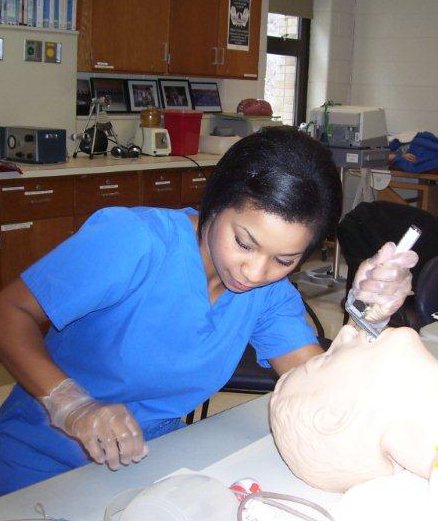
Provide effective treatment of respiratory and cardiac disorders, including using life-support equipment and intervening in emergencies and traumas. They also perform cardiopulmonary testing, evaluate patients, and plan care.
What will I study?
Supporting sciences, math, communications, and specialized courses in cardiac and respiratory care. We combine classroom, laboratory and clinical experiences throughout the program.
Where could I work?
In hospitals, intensive care units, emergency rooms, newborn and pediatric units, patient s homes, sleep laboratories, skilled nursing facilities, pulmonary rehabilitation programs, doctor s offices, pulmonary function laboratories, asthma education programs, smoking cessation programs, air transport and ambulance programs, and in case management programs.
What are my job prospects?
Career and advancement opportunities are excellent, especially for those willing to travel or relocate. With faster-than-average growth, this profession has a bright future with job security and room for advancement.
What credentials can I get?
With our degree you'll be eligible to take exams to become a Certified Respiratory Therapist (CRT) or a Registered Respiratory Therapist (RRT).
Professional Organizations
Whitesburg Respiratory Care Class Schedule
- Semester 1 - Fall
- BIO 139 - Human Anatomy & Physiology II (4 Credit Hours)
- RCP 110 - Cardio Anatomy & Physiology (3 Credit Hours)
- RCP 120 - Theories & Principles (4 Credit Hours)
- RCP 135 - Respiratory Care Pharmacology (1 Credit Hours)
- RCP 150 - Clinical Practice I (2 Credit Hours)
- Semester 2 - Spring
- RCP 125 - Cardiopulmonary Evaluation (4 Credit Hours)
- RCP 175 - Clinical Practice II (3 Credit Hours)
- RCP 180 - Ventilatory Support (3 Credit Hours)
- RCP 214 - Advanced Diagnostic Procedures (3 Credit Hours)
- RCP 228 - Preventative & Long-Term Care (2 Credit Hours)
- Semester 3 - Summer 2
- RCP 200 - Clinical Practice III (3 Credit Hours, first mini-semester)
- RCP 225 - Clinical Practice IV (3 Credit Hours, second mini-semester)
- Semester 4 - Fall
- RCP 190 - Advanced Ventilator Support (2 Credit Hours)
- RCP 210 - Cardiopulmonary Pathophysiology (3 Credit Hours)
- RCP 212 - Neonatal & Pediatric Respiratory Care (3 Credit Hours)
- RCP 206 – Emergency and Special Procedures (2 Credit Hours)
- RCP 250 - Clinical Practice V (3 Credit Hours)
- RCP 260 – Respiratory Care Seminar
Respiratory Therapy Students Must Exhibit The following For Student Success:
- Intellectual and conceptual skills demonstrating the academic readiness needed to succeed in the rigorous Respiratory Care curriculum.
- Clinical thinking skills sufficient to make sound clinical judgments across a variety of healthcare settings.
- Problem-solving skills necessary to modify and adjust therapies in response to patient needs.
- Interpersonal skills sufficient to allow appropriate interaction with individuals and groups from a variety of cultural and socioeconomic backgrounds.
- Communication, written and verbal communication that is appropriate to create clear and concise dialogue in a clinical and professional setting.
- Mobility and physical abilities appropriate to maneuver in small spaces while maneuvering equipment.
- Gross and fine motor skills appropriate to perform patient care procedures to national standard which include safety and efficiency.
- Appropriate physical strength and endurance to be able to access patient as well as perform therapies on patients for extended periods of time.
- Auditory ability sufficient to monitor and assess health care needs of patients.
- Tactile ability appropriate for assessment of physical health conditions.
- Ability to deal effectively with stressful situations and maintain professional and positive interactions with all patients, families, preceptors, faculty, and fellow students.
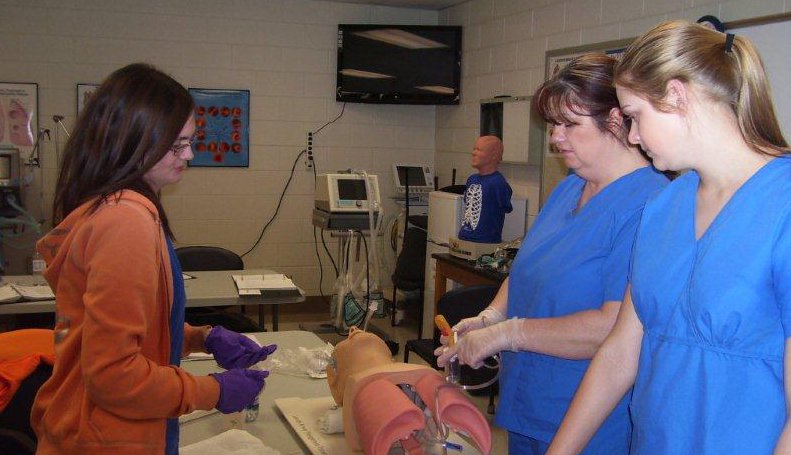
Upon completion of this program, the student can:
- Demonstrate proficiency in conducting thorough patient assessments, including evaluating respiratory conditions, recognizing signs of distress, and interpreting clinical data.
- Perform appropriate selection and delivery of respiratory care interventions, encompassing oxygen therapy, aerosol therapy, airway management, and mechanical ventilation.
- Demonstrate critical thinking and problem-solving to make informed clinical judgments, prioritize care, and effectively respond to rapidly changing patient conditions.
- Display ethical standards and effective communication with patients, families, and healthcare teams.
- Demonstrate knowledge of cardiopulmonary anatomy, physiology, and pharmacology by interpreting diagnostic data effectively in assessment and diagnosis of respiratory conditions.
- Demonstrate professional communication skills by composing and managing emails with proper etiquette, effectively communicating with program faculty, and utilizing a computer system to perform basic tasks such as organizing files, submitting assignments, and navigating online platforms.
Students must submit a graduation application at the beginning of the term in which they plan to graduate. Applications are available through the Admissions Office or may be completed online using the link below.
Before submitting the application, students must meet with their academic advisor to verify that all degree requirements have been met. Completed applications must be returned to the Admissions Office by the following deadlines:
- Mid-March for Spring graduation
- Mid-May for Summer graduation
- Mid-October for Fall graduation
Students choosing to apply online must also adhere to these deadlines:
Application for Graduation
All courses outline specific objectives, goals, and learning outcomes that collectively ensure students achieve the program’s terminal objectives and fulfill the mission of the program.
Program Graduation Requirements
To be eligible for graduation, students must:
- Successfully complete all clinical requirements and program competencies.
- Earn a minimum grade of “C” in all RCP coursework.
- Successfully complete all required general education coursework.
- Successfully completion of either a Therapist Multiple-Choice (TMC) Examination or the Respiratory Therapy Examination.
The Respiratory Care Program welcomes transfer students who meet the eligibility requirements and demonstrate a strong commitment to the field of respiratory care. The transfer policy outlined below ensures that students transition seamlessly into the program while maintaining the integrity and academic standards of the curriculum.
Eligibility Criteria
- Accredited Institution: Students must have completed courses at an accredited KCTCS institution in a program recognized by the Commission on Accreditation for Respiratory Care (CoARC).
- Minimum GPA: A minimum cumulative GPA of 3.0 or higher in all prior coursework is required.
- Good Standing: The student must be in good academic and disciplinary standing at their previous institution.
- Prerequisite Courses: Completion of all prerequisite courses with a grade of "C" or higher is mandatory. Prerequisites may include anatomy and physiology, math, English, or other courses required for program entry.
Application Process
- Application Form: Submit a completed application for transfer admission to the Respiratory Care Program by the published deadline.
- Official Transcripts and ACT: Provide official transcripts from all previously attended institutions. Proof of ACT (18 or higher) is required.
- Letter of Recommendation: Provide a letter of recommendation from the Program Director at the previous institution.
- Personal Statement: Include a statement explaining the reasons for transferring, career goals, and commitment to the respiratory care profession.
- Interview: Participate in an interview with the program director or admissions committee.
Transfer Credit Evaluation
- Course Equivalency: Transfer credit will be granted for courses that are deemed equivalent in content, rigor, and credit hours to courses offered in the Respiratory Care Program.
- Grade Requirements: Only courses with a grade of "C" or higher will be considered for transfer credit.
- Timeframe: Applicant must be currently enrolled in a KCTCS Respiratory Care Program to be considered
for transfer. Any gap in programmatic enrollment constitutes a new application and
coursework begins in the first term of the new cohort.
Credit Limitations: Students must complete a minimum of 50% of the program’s required respiratory care coursework at Southeast Kentucky CTC.
Clinical Requirements
Transfer students must complete all clinical education requirements as outlined in the Respiratory Care Program curriculum. Clinical competencies completed at another institution will be evaluated individually, and additional clinical experiences may be required.
Additional Considerations
- Program Capacity: Admission for transfer students is contingent on available space within the program and clinical affiliates.
- Academic Policies: Transfer students are subject to the same academic and professional policies as all other students in the program.
- Readiness Assessment: Transfer students may be required to complete a readiness assessment or skills evaluation to determine placement within the program.
Non-Discrimination Statement
The Kentucky Community and Technical College System is an equal educational and employment opportunity institution and does not discriminate on the basis of, race, religion, color, sex, gender identity, gender presentation, national origin, age, disability, family medical history, or genetic information. Further, we vigilantly prevent discrimination based on sexual orientation, parental status, marital status, political affiliation, military service, or any other non-merit-based factor.
| Item | Cost |
|---|---|
| Books (including Kettering Home Program) | $2,500.00 |
| Scrubs (2 sets monogrammed) | $125.00 |
| Shoes (1 Pair) | $100.00 |
| Background Check / Drug Screen / Immunization Tracker | $200.00 |
| Stethoscope | $100.00 |
| Watch with Second Hand | $30.00 |
| Pulse Oximeter | $30.00 |
| Misc. Items (Notebooks, Pens, & Pencils) | $150.00 |
| Cap, Gown, Diploma Cover for Graduation | $80.00 |
| Tuition (46 Hrs. @ $197/credit hour including liability insurance) | $9,172.00 |
| Mock NBRC TMC Written x 2 | $150.00 |
| Mock NBRC RRT Simulation | $75.00 |
| NBRC Tests (TMC Exam & Clinical Simulation Exam) | $390.00 |
| Classmates Learning Resources | $100.00 |
| Trajecsys Clinical Tracking System | $180.00 |
| Vaccinations | Variable |
| AARC Membership | $50.00 |
| NRP / ACLS / PALS Tests | $75.00 |
| Estimated Total Cost | $13,507.00 |
The Kentucky Community and Technical College System has zero tolerance for illegal discrimination of any kind. Any student who feels he/she may have been discriminated against or subjected to harassment by students or employees because of their race, color, national origin, sex, sexual orientation, marital status, religion, beliefs, political affiliation, veteran status, age, or disability (including denial of a request for an accommodation), has the right to pursue an informal and/or formal discrimination grievance. The informal student discrimination grievance procedure is described below. The chief student affairs officer or his/her designee shall be responsible for investigating student discrimination grievances. If appropriate, this shall be conducted in collaboration with the college human resources director. Each college shall provide a letter, statement, or poster containing information regarding the KCTCS Student Discrimination Grievance Procedure with the name, address, and phone number of the local chief student affairs officer. Most difficulties can be resolved by talking to someone. Therefore, students are encouraged to discuss these problems promptly and candidly with the chief student affairs officer or his/her designee.
- If a student thinks that he/she has been discriminated against, the student shall inform the chief student affairs officer or his/her designee within thirty (30) calendar days of the occurrence of the alleged incident. The chief student affairs officer or his/her designee shall conduct a preliminary investigation of the discrimination grievance.
- The student, chief student affairs officer or his/her designee, and other involved parties shall work informally to negotiate a solution within fourteen (14) calendar days. The informal student discrimination grievance procedure shall be completed within forty-four (44) calendar days of the occurrence of the alleged incident.
- If the grievance is not resolved to the satisfaction of the student through the informal grievance procedure, the student may file a formal appeal according to the KCTCS Code of Conduct.
Jasmine Glispie BS, RRT
Program Director
Marissa Rutherford
Director of Clinical Education
Dr. Rafiqul Alam, M.D.
Pulmonologist
Medical Director
Students who are enrolled in an accredited Respiratory Care program may be employed as a student Respiratory Care practitioner (RCP). The Limited Mandatory Certificate issued by the Kentucky Board for Respiratory Care (KBRC) governs the duties of the student RCP. The Limited Certificate must be applied for before beginning employment.
The following are requirements of the program:
- The student must not be on probation for any reason at any time during the time of employment.
- The student must maintain a “C” average in each course and clinical performance must be evaluated as satisfactory.
- The student must complete specific competencies to be eligible. Go to the KBRC website for more information.
- The student must maintain regular attendance.
- If the student is too ill to attend scheduled clinics or didactic sessions, then the student is considered too ill to work as a student RCP. The student must attend clinical or class for the full day. Should the student call in for clinics or class, and work as a student RCP the same day, it is considered as a violation of program policy. The employer will be contacted and informed.
- Employment time is not substituted for clinical experience.
- Clinical performance evaluations may not be completed during the time the student is employed.
Delineation between Clinical Time and Clinical Site Employment
While enrolled in and attending the Respiratory Care program many students are employed at various clinical sites. There must remain a clear distinction between the student and employee roles; and to that end:
- Students must not be utilized at facilities to substitute for clinical, instruction, or administrative staff.
- Students must not complete clinical coursework while working in an employee status at any clinical site.
- Students may not receive/accept remuneration in exchange for work performed at or during their clinical education, course work, and experiences.
- Students may not use patient information gained during employment to complete clinical coursework.
